


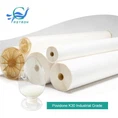
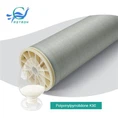
Adsorbent for Beverages
Why Choose Us?
High-quality Products
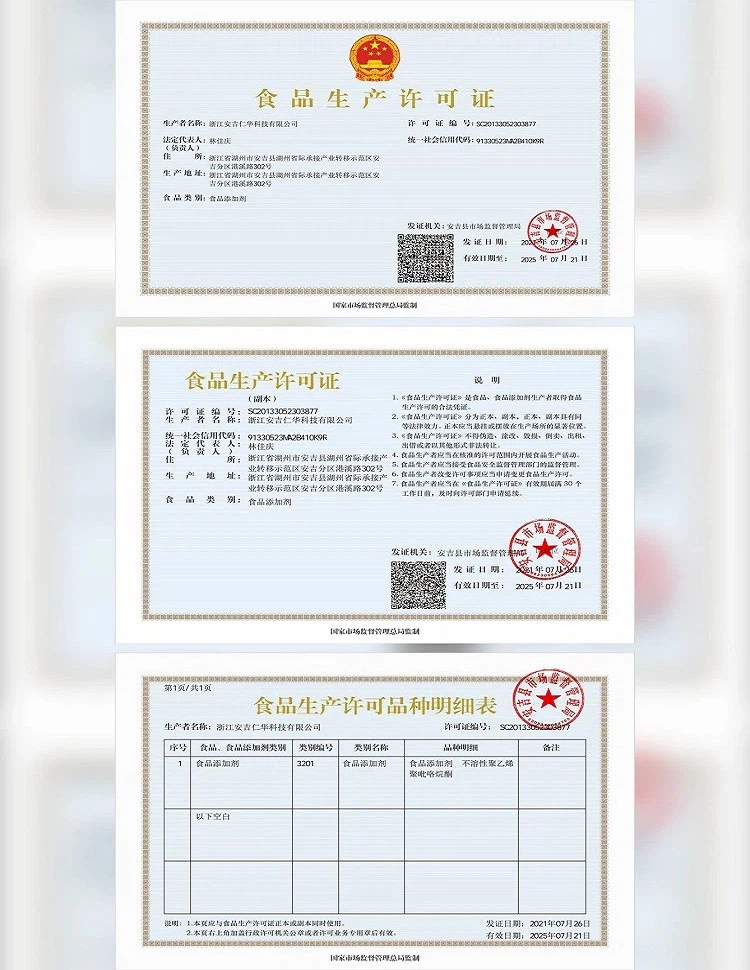
Its products lead the domestic market, achieving pharmaceutical-grade standards and completing the national filing of pharmaceutical excipients, obtaining food production permits. Strong commitment to quality with IS09001 certification and food production license.
Diverse Applications
After 8 years of research and development by the company's founding team, thecompany has formed multiple product series, including polyvinylpyrrolidone (PVP-K).crospovidone (PVPP), N-vinylpyrrolidone (NVP), Polymers with excellent propertiessuch as VP/A copolymer, PVP/A binary copolymer, and povidone-iodine (PVP-l). The products have diverse applications across various industries.
Rich Experience
Dedicated to strict quality control and attentive customer service, our experienced staff is always available to discuss your requirements and ensure complete customer satisfaction.
Competitive Pricing
We offer competitive pricing without compromising on quality, making our products accessible to a wide range of customers.
Definition of Adsorbent for Beverages
Adsorbent for beverages are solid materials that are added to beer, usually after primary filtration, to bind (adsorb) the compounds that produce haze. A range of substances in beer can combine as the beer ages to produce particles large enough to reflect light and cause turbidity. Primary among these substances are polyphenols and proteins. The most common commercial adsorbent for beverages are silica gel, which selectively binds the haze- promoting proteins, and polyvinylpolypyrrolidone (PVPP), which binds polyphenols. PVPP can be used either as a powder or in the form of impregnated secondary filtration sheets. In either instance the PVPP, which is quite expensive, can be regenerated and then reused. Silica gel and PVPP are combined in several commercial products for ease of use. Adsorbent for beverages are not considered additives because they are completely filtered out of the beer along with the adsorbed proteins and polyphenols after treatment.
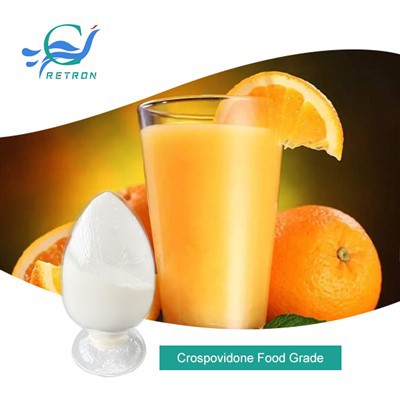

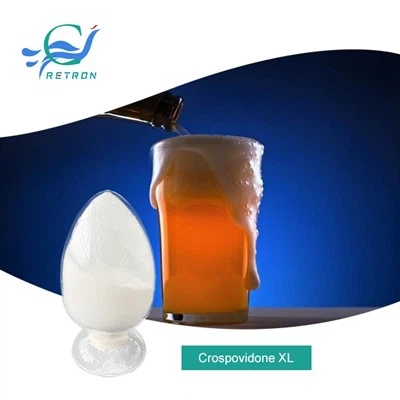


Reduction of lost microparticles
In classic PVPP regeneration cycles, approximately 0.3 to 1% of the PVPP is typically lost during one run. In an industrial set-up, this can amount to several kilograms of particles with every cycle of regenerating the PVPP. The particles that are slipping through the PVPP filter system are retained downstream in trap filters. On the contrary, the fixed-bed Pall CBS technology reduces the PVPP losses to a non-detectable level. The loss of Adsorbent For Beverages is less than 0.3 % on 1000 regeneration cycles, reducing the loss rates of PVPP particles by a factor of several thousand, compared to the conventional systems.
Advantageous technology and ease of use
In the Adsorbent For Beverages, the controlled interaction of the different columns and the possibility to run a regulated bypass enables precise fine tuning of the stabilisation effect. Different customer specific recipes can be programmed into the system easily, enabling the user to treat various production requirements at the push of a button. Due to the compact vessel design of the unit, costs for cleaning-in-place (CIP) and beer losses are significantly reduced when compared to traditional PVPP use or alternative technologies for beer stabilization.
Adsorbent For Beverages Processing
Adsorbent For Beverages is a polyphenol adsorbant. The PVPP treatment can complement a protein adsorption treatment but it can also be used as the only treatment. Adsorbent For Beverages can be added to the maturation tank or dosed online to beer going to filtration.
A way to improve the process is to treat the wort prior to fermentation with a carrageenan-micronized PVPP composite. The composite is added about 10 minutes before the end of the boil, in the wort kettle. Carrageenan absorbs positively charged proteins, carbohydrates and metal ions. Benefits of this treatment are claimed to be higher wort yield, improved wort clarity, faster fermentation, improved yeast vitality and crop, longer filter runs, lower beer haze and longer stability of the packaged beer.
Adsorbent for beverages is a synthetic, high-molecular-weight clarifying agent made up of cross-linked monomer of polyvinylpyrrolidone. Pvpp has long been used in the beverage industry as a polyphenol adsorbent. Although, it has been called as a "protein-like" fining agent, insoluble pvpp interacts with only few reactive groups. Hence, adsorbent for beverages is used for binding and removing smaller phenolic compounds such as catechins and anthocyanins, which are responsible for causing browning and bitterness in wines. However, adsorbent for beverages, along with charcoal and casein, can remove resveratrol, a component that imparts certain health benefits (castellari et al., 1998). Typical usage level of pvpp for wines ranges from 1 to 6 lb (1000 gallons)−1 (or 0.12–0.72 g l−1).

How is adsorbent for beverages made?
Added to must or wine, adsorbent for beverages eliminates certain phenol substances responsible for browning or organoleptic deviations in certain wines.
Adsorbent for beverages is insoluble. It fixes the substances responsible for the browning of wines, and also fixes certain molecules that add bitterness to the taste of must or wine.
Adsorbent for beverages is formed from macromolecules organised in a lattice. It acts by adsorbing oxidised and oxidisable polyphenols, forming bonds between the phenolic hydroxyl group, and an amide bond of the pvpp, removing the brown colour.

PVPP is a cross-linked polymer of PVP, a substance which is widely used in medicine, for example. By crosslinking, the molecule becomes insoluble so that PVPP can be completely removed after it has fulfilled its technological task.
Adsorbent For Beverages has a large surface area onto which haze-forming polyphenols are bound by strong hydrogen bonding. The beverages particles adsorb the polyphenols in the beer and remove them.
Adsorbent For Beverages can be used as single use material such that it is discarded after each use. However, there is also regenerable PVPP available. In specific PVPP filters, the particles are retained and after adsorbing the polyphenols, the Adsorbent For Beverages can be freed from the afore adsorbed polyphenols by washing it with caustic.
What Does Adsorbent For Beverages Do in Wine?
Adsorbent for beverages is a synthetic polymer used to reduce the level of phenolic compounds associated with browning and astringency in white wine. It can also be used to remove pink colour and pinking precursor compounds in white wines. Adsorbent for beverages is practically insoluble in wine and absorbs the low molecular weight phenolics, especially anthocyanins and catechins. Adsorbent for beverages is a gentle fining agent which preserves wine aroma, unlike some other fining agents. When used for colour reduction in white wines, combining with carbon is more effective in many cases, as it helps with clarification of the carbon particles. Pvpp is not commonly used in red wines, however, it can reduce bitterness and brighten the colour. In many cases adsorbent for beverages can also reduce certain off-flavours and bitterness.
●Preparation of 10 % w/v stock solution for laboratory fining trials add 10 ml of 96 % ethanol to about 80 ml of distilled water. Add 10 g of pvpp. Stir to prepare a thoroughly mixed slurry and make to volume with distilled water in a 100 ml volumetric flask. Mix thoroughly.
●Conducting and assessing a laboratory trial one ml of the 10% w/v stock solution added to 100 ml of wine represents an addition rate of 1000 mg/l.Typical ranges to evaluate are 100 to 800 mg/l for white wines and 100 to 450 mg/l for red wines. When used to reduce astringency, the appropriate fining rate is determined by sensory evaluation. When adsorbent for beverages is used to remove brown colour and pink colour, selection of the appropriate fining rate can be aided by the results of spectrophotometer readings, as well as by visual examination.
●Addition in the cellar accurately weigh out the required amount of adsorbent for beverages and make a slurry with minimal volume of distilled water. Add the slurry slowly with mixing to the wine, allow a few days for settling, then earth or pad filter.
Adsorbent for beverages is a highly effective, 100% polyvinylpolypyrrolidone (pvpp) stabilizer. It is optimized for single use, either on its own or in conjunction with other stabilizers, to offer a highly effective means of preventing non-biological haze in all types of beer. Non-biological haze formation results primarily from the hydrogen bonding between haze-producing proteins and the polyphenol constituents of beer. To achieve colloidal stability, it is necessary to reduce these protein/polyphenol complexes or prevent them from forming. This can be done by reducing the problematic polyphenols, proteins or both.
Our premium grade polyvinylpolypyrrolidone (pvpp) serves as a critical ingredient in both the beverage and pharmaceutical industry, enhancing product quality and performance, while also extending shelf-life and reducing costs.
The use of adsorbent for beverages industry has revolutionized the ways in which beer and wine are produced and preserved, elevating their quality and shelf-life.
●Improves and prolongs the color and flavor of beer, thereby enhancing user experience.
●Prevents color discoloration in wines, contributing to higher visual appeal.
●Enriches the flavor and aroma of red wines, offering a remarkable sensory experience.
What Is the Use of Adsorbent For Beverages in Beer?
Pvpp is used to reduce phenolic substances – mainly tannins – in order to decrease astringency and instability in beer. Adsorbent for beverages is used as stabilising agent because of its ability to bind with haze active polyphenols. Adsorbent for beverages has a structure similar to peptidically linked proline chain. Addition of pvpp has an explicit effect on the amounts of polyphenols in the finished beers. Application of adsorbent for beverages at the end of wort boiling is related to a considerable decrease in total polyphenols, flavanoids, and haze-active proanthocyanidins in the fi nished beers. A pronounced decrease in haze-active proanthocyanidins, i.E. Relatively 40 % compared to the reference beer, can already be noticed after a short contact time of 3 min during wort boiling. A contact time of 5 min results in a less efficient removal of the haze-active proanthocyanidins.
The effect of adsorbent for beverages treatment is also expressed by the strong decrease in reducing power of the resulting beers d and e. This may result in a diminished flavor stability of these beers. Flavanoids in beer are expected to scavenge active oxygen species and prevent the oxidation of beer components during storage. Both malt and hop polyphenols suppress formation of ageing carbonyls during the brewing process and upon beer storage. In particular polyphenols such as catechin and procyanidin b-3 (both flavanoids) act as powerful antioxidants, thereby protecting other components towards oxidation. Finally, levels of sensitive proteins also seem to be affected in the finished beers by the treatment with adsorbent for beverages at the end of wort boiling. The addition of pvpp in the upstream process has no negative effect on the beer taste of fresh beer. Despite of the lower reducing capacity of the beers treated with pvpp, in correlation to their reference, the ageing scores were similar as the reference beer.
Our Factory
Zhejiang Retron Biotech Co., Ltd. (referred to as Retron Biotech) is located in the town of Tianzi Lake, Anji County, which is the first county in China to receive the "United Nations Habitat Environment Award" and known as the "Hangzhou Back Garden". Retron Biotech was established in April 2021, covering an area of over 5.3 acres with a total investment of 28 million USD. It is a technology-based company specializing in the research and development, production, domestic and overseas business, and application technical services of polymer materials.
The company has obtained ISO 9001 Quality Management System certification, ISO 14001 Environmental Management System certification, and ISO 45001 Occupational Health and Safety Management System certification. Its products lead the domestic market, achieving pharmaceutical-grade standards and completing the national filing of pharmaceutical excipients, obtaining food production permits. The company's PVPP and PVP-K30 products have reached the highest versions of the EP10, USP43, and CP2020 standards in the international pharmacopoeias.


Our certificate


Ultimate FAQ Guide to Adsorbent for Beverages
As one of the most professional adsorbent for beverages manufacturers and suppliers in China, we're featured by quality products and good service. Please rest assured to buy high-grade adsorbent for beveragesmade in China here from our factory.
adsorbent for beverage nutrient preservation, beverage adsorbent, adsorbent to purify beverages