


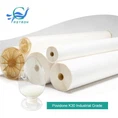
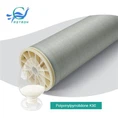
Binder
Why Choose Us?
High-quality Products
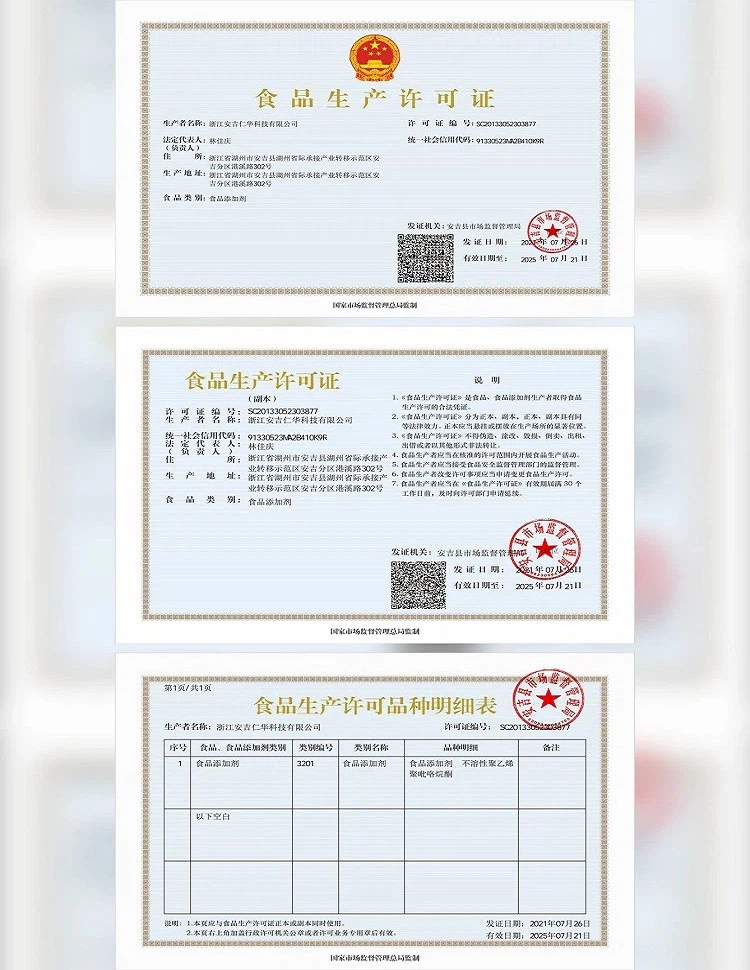
Its products lead the domestic market, achieving pharmaceutical-grade standards and completing the national filing of pharmaceutical excipients, obtaining food production permits. Strong commitment to quality with IS09001 certification and food production license.
Diverse Applications
After 8 years of research and development by the company's founding team, thecompany has formed multiple product series, including polyvinylpyrrolidone (PVP-K).crospovidone (PVPP), N-vinylpyrrolidone (NVP), Polymers with excellent propertiessuch as VP/A copolymer, PVP/A binary copolymer, and povidone-iodine (PVP-l). The products have diverse applications across various industries.
Rich Experience
Dedicated to strict quality control and attentive customer service, our experienced staff is always available to discuss your requirements and ensure complete customer satisfaction.
Competitive Pricing
We offer competitive pricing without compromising on quality, making our products accessible to a wide range of customers.


Copolymer

A copolymer is a polymer composed of two or more different monomer substances that are chemically bonded together. Copolymer materials are used in a variety of applications, such as adhesives, coatings, plastics, and rubber. They are generally less expensive than homopolymers because they are easier to manufacture, and they typically have better physical properties. Additionally, copolymer materials are often used for specialized applications because they can be tailored to meet specific performance requirements.
●Homopolymer materials are usually stronger than copolymer materials.
●Homopolymer materials have better temperature resistance than copolymer materials.
●Homopolymer materials can be used for high-performance applications.
●Homopolymer materials are generally more durable than copolymer materials.
●Homopolymer materials can be processed using standard techniques.
What Are the Types of Copolymer?
All copolymers may consist of two or more types of monomers. The different monomers can repeat singularly, in blocks, or in some other statistically repeatable way. Types of copolymers include: polyvinyl acetate, ethylene-vinyl acetate, high-impact polystyrene, acrylonitrile butadiene styrene, styrene-butadiene rubber, styrene-acrylonitrile rubber, styrene butadiene styrene, and polyethylene oxide.
Copolymers and homopolymers differ in their chemical structure. Homopolymers consist of one variant of monomer which is repeated multiple times in a chain. Copolymers differ from homopolymers in structure because they use two or more variants of monomer to produce a chain.
Additionally, copolymers and homopolymers differ in the way their monomer chains are connected. Copolymers are differentiated into linear copolymers and branched copolymers.
These two categories are further divided into alternating, statistical, and block for linear copolymers, and grafted and star for branched copolymers.
An alternating linear copolymer alternates consecutively. A block linear copolymer will alternate in blocks of repeating monomers.
What Is the Method of Preparation of Copolymers?
When it comes to materials science, choosing copolymers a difficult decision for consumers. In today's polymer synthesis, copolymer synthesis is of great interest in polymer technologies especially by using controlled radical polymerization and different polymerization techniques together.
The success achieved in copolymer synthesis by using different polymerization techniques such as ATRP-ROP, RAFT-ROP, and ATRP-RAFT on the same step or different steps was achieved by combining redox polymerization with moderate polymerization conditions and controlled radical polymerization techniques as well.
Properties Comparison of Copolymer and Homopolymer
|
Property |
Copolymer (Generic) |
Homopolymer (Generic) |
|
Density |
0.9 g/cm³ |
0.9 g/cm³ |
|
Tensile Strength |
60 MPa |
69 MPa |
|
Tensile modulus |
950 N/mm² |
1,600 N/mm² |
|
Tensile stress |
25 N/mm² |
37 N/mm² |
|
Melting point |
160–165 °C |
135–159 °C |
Copovidone VA 64

Copovidone VA 64 is vinylpyrrolidone-vinyl acetate copolymers. They are used in the pharmaceutical industry as dry binder in tablets, as matrix formers for amorphous solid dispersions, as retarding and as film-forming agents. Copovidone VA 64 is commonly used in seed coatings, matrix formers, binders, film forming agents, co-stabilizers, controlled release, solubles, dispersants, crystallization inhibitors, hair mending, moisturizing, and film formation in cosmetics and hair/skin care products.
Advantages of Copovidone VA 64
Copovidone VA 64 is a white or slightly yellowish powder with a faint characteristic odor and practically no taste. It readily dissolves in all hydrophilic solvents. Solutions of more than 10 % concentration can be prepared in water, ethanol, isopropanol, methylene chloride, glycerol and propylene glycol. It is less soluble in ether, cyclic, aliphatic and alicyclic hydrocarbons.
● Suitable for increasing blend compressibility.
● Highly effective binder even at low concentrations for medium and high dose formulations.
● Very good plasticity combined with fine particle size distribution produce very hard tablets.
● Amenable for processing and storage in all temperature zone markets.
● Recently obtained GRAS/SA status (Generally Recognized As Safe/Self-Affirmed) by the U.S. Food & Drug Administration (FDA) for use in food and nutritional supplements e.g. vitamin and mineral tablets.
Types of Copovidone Va 64
Food grade
Food grade copovidone pvp va is a synthetic polymer that is used as an excipient in many pharmaceutical formulations. It is a white, odorless, and tasteless powder that is insoluble in water. Copovidone pvp va has excellent binding, film-forming, and emulsifying properties. It is used as a binder in tablet formulations and as a suspending agent in suspension formulations.
Medical grade
Medical-grade copovidone pvp va is a type of synthetic polymer that is used in various medical applications. It is white or off-white in color and is insoluble in water. This copolymer is made up of polyvinylpyrrolidone and vinyl acetate units. Pvp va can be found in different molecular weights and viscosities. Additionally, it has good film-forming properties and can be used as an adhesive.
Industrial grade
Industrial grade copovidone pvp va is a white, odorless, hygroscopic powder that is soluble in water and insoluble in organic solvents. It is used as a binder, suspending agent, and disintegrant in tablets and capsules, and as a film former in topical preparations. It is used as an emulsifier, stabilizer, thickener, and binding agent. Copovidone pvp va is also used in adhesives, films, and coatings.
Copovidone and crospovidone are commonly used excipients in solid oral dosage forms for many decades. Typically, copovidone VA 64 is used as dry binder and crospovidone as disintegrant in tableting formulations. The use of dry binder and disintegrant needs to be balanced to assure both: strong but quickly disintegrating tablets.
The influence of different copovidone VA 64 and crospovidone grades on the tablet's tensile strength and the ejected solid fraction at different compression pressures were evaluated systematically: Compactability plots, compressibility plots and bondability plots were generated to visualize the influence of the individual excipient on the tableting characteristics.
Contour plots were generated to illustrate the influence of each excipient on the tensile strength and disintegration time of the resulting tablets at different compression pressures. Potential interactions and synergies respectively between the different grades of the tested excipients were illustrated.

Vinylpyrrolidone

Poly(N-vinylpyrrolidone) (NVP) is a widely researched material for medicine and biological systems. Its copolymers, synthesized with NVP, have numerous properties and are essential for building sorbents, membranes, and preventing biofilm growth.
Poly(N-vinylpyrrolidone) (NVP) is a widely researched material for medicine and biological systems. Its copolymers, synthesized with NVP, have numerous properties and are essential for building sorbents, membranes, and preventing biofilm growth.
● Soluble in various solvents (e.g.: water, alcohol, amide and chlorineated solvents)
● Heat Resistance (Tg=160-170℃)
● Highly hygroscopicity
● Good film-forming properties
● Adhesion
● Ability to form complexes

Uses of Vinylpyrrolidone
Form a suspension: The main idea behind using Vinylpyrrolidone is to easily distribute or suspend an otherwise insoluble solid in a liquid.
Prevent emulsions from separating: Vinylpyrrolidone helps to keep emulsions from separating into their oil and liquid components.
Hold ingredients together: Vinylpyrrolidone aids in holding together the ingredients of a compressed tablet or cake.
Does not leave any residue: The application of Vinylpyrrolidone-containing products does not leave any sticky layer on the applied region but dries to form a thin coating on the skin, hair or nails.
Helps maintain the integrity of the hair: When formulated in hair care products, Vinylpyrrolidone holds the structural integrity of hair strands and helps in maintaining a good hairstyle. This is because Vinylpyrrolidone inhibits the hair's ability to absorb moisture.
As a food additive: Non-cosmetic uses of Vinylpyrrolidone have also been reported, including its use as a food additive.
As an antiseptic: Vinylpyrrolidone is also a component of over-the-counter drugs (OTC) and an antiseptic when combined with iodine.
As a clarifying agent: Vinylpyrrolidone is used as a clarifying agent in beer, wine, and vinegar production.
As an adjuvant: Vinylpyrrolidone is also used as an adjuvant in the coatings applied on fresh citrus fruits.
N-Vinylpyrrolidone (NVP) is an organic compound consisting of a 5-membered lactam ring linked to a vinyl group. It is a colorless liquid although commercial samples can appear yellowish.
It is produced industrially by vinylation of 2-pyrrolidone, i.e. the base-catalyzed reaction with acetylene. It is the precursor to polyvinylpyrrolidone (PVP), an important synthetic material. The NVP monomer is commonly used as a reactive diluent in ultraviolet and electron-beam curable polymers applied as inks, coatings or adhesives.
Polymers of N-Vinylpyrrolidone: Synthesis, Characterization and Uses
Polyvinylpyrrolidone (PVP) having molecular weights (Mw) from 2500 to about 1 million is mainly obtained by radical polymerization in solution. The higher molecular weight type products are polymerized in aqueous solution mostly using hydrogen peroxide as initiator. The polymers thus obtained have hydroxyl and carbonyl end groups. More stable end groups can be obtained by polymerization in solvents, which may act as chain transfer agents and which produce low molecular weight type products. Copolymers especially with monomers such as vinyl acetate and with various acrylic compounds may also be produced by solution polymerization. Popcorn polymerization leads to insoluble PVP.
Thereby VP is polymerized without initiator in the presence of small amounts of bifunctional monomers. The polymeric flakes thus formed are highly cross-linked, mainly due to entanglements. The molecular weight distribution of soluble PVP is broad due to transfer reactions. An unusual property of PVP is its solubility in water as well as in various organic solvents. The glass transition temperature of high molecular weight polymers (Mw=1 million) is about 175°C and falls to values under 100°C with decreasing molecular weight Mw=2500).
PVP forms complexes with various compounds, especially with H-donors such as phenols and carboxylic acids. The complex formed with cross-linked PVP and polyphenols is used commercially for the clarification of beverages. Another commercial use is the complexation of iodine with linear PVP, which leads to effective disinfectants of very low toxicity. Further important applications of PVP in the pharmaceutical field are their use as binding or film forming agents for tablets, and as solubilizing agents for injections. The swelling ability of cross-linked PVP in water is used in disintegrating agents for tablets. In the cosmetic field VP polymers are used as film formers for hair dressing products. Examples of technical applications are adhesives, textile auxiliaries and dispersing agents.
Vinylpyrrolidone is an inert, non-toxic, temperature-resistant, pH-stable, biocompatible and biodegradable polymer that facilitates encapsulation and administering both hydrophilic and lipophilic drugs. Polymer refers to a long chain of repeating units of vinyl pyrrolidone.
This makes Vinylpyrrolidone an advantageous and versatile excipient for formulating broadly used conventional to novel controlled delivery systems.
Vinylpyrrolidone is soluble in water and other polar solvents and has an excellent wetting property, readily forming films. This is the reason why it makes a good coating substance or an additive to coatings.
Moreover, in cosmetics and personal care products, Vinylpyrrolidone is used as a binding agent, in stabilizing emulsions, in hair fixatives, and as a non-surfactant suspending agent.
Vinylpyrrolidone in the Beauty Industry

This versatile ingredient used in the cosmetics and beauty industry is a binder, film former, emulsion stabilizer, suspending agent and hair fixative and is seen primarily in products such as mascara, eyeliner, hair conditioners, hair sprays, shampoos and other hair care products.
It keeps emulsions from separating into their oil and liquid components and holds together the ingredients of compressed tablets or cakes. Vinylpyrrolidone also can dry and form a thin coating on the skin, nails or hair, and when it is seen as an ingredient in hair products, it is used to hold hair styles in place by preventing the hair’s ability to absorb moisture. It is also used in contact lens solutions and as the thickening agent in whitening toothpaste and tooth whitening gels.
What is the best solvent for Vinylpyrrolidone?
|
Good solvent |
Poor solvent |
|
Methanol |
Toluene |
|
Ethanol |
Xylene |
|
Isopropanol |
Hexane |
|
Butanol |
Cyclohexane |
Our Factory
Zhejiang Retron Biotech Co., Ltd. (referred to as Retron Biotech) is located in the town of Tianzi Lake, Anji County, which is the first county in China to receive the "United Nations Habitat Environment Award" and known as the "Hangzhou Back Garden". Retron Biotech was established in April 2021, covering an area of over 5.3 acres with a total investment of 28 million USD. It is a technology-based company specializing in the research and development, production, domestic and overseas business, and application technical services of polymer materials.
The company has obtained ISO 9001 Quality Management System certification, ISO 14001 Environmental Management System certification, and ISO 45001 Occupational Health and Safety Management System certification. Its products lead the domestic market, achieving pharmaceutical-grade standards and completing the national filing of pharmaceutical excipients, obtaining food production permits. The company's PVPP and PVP-K30 products have reached the highest versions of the EP10, USP43, and CP2020 standards in the international pharmacopoeias.


Our certificate


Ultimate FAQ Guide to Binder
As one of the most professional binder manufacturers and suppliers in China, we're featured by quality products and good service. Please rest assured to buy high-grade bindermade in China here from our factory.