


Pharmaceutical Excipients
Why Choose Us?
High-quality Products
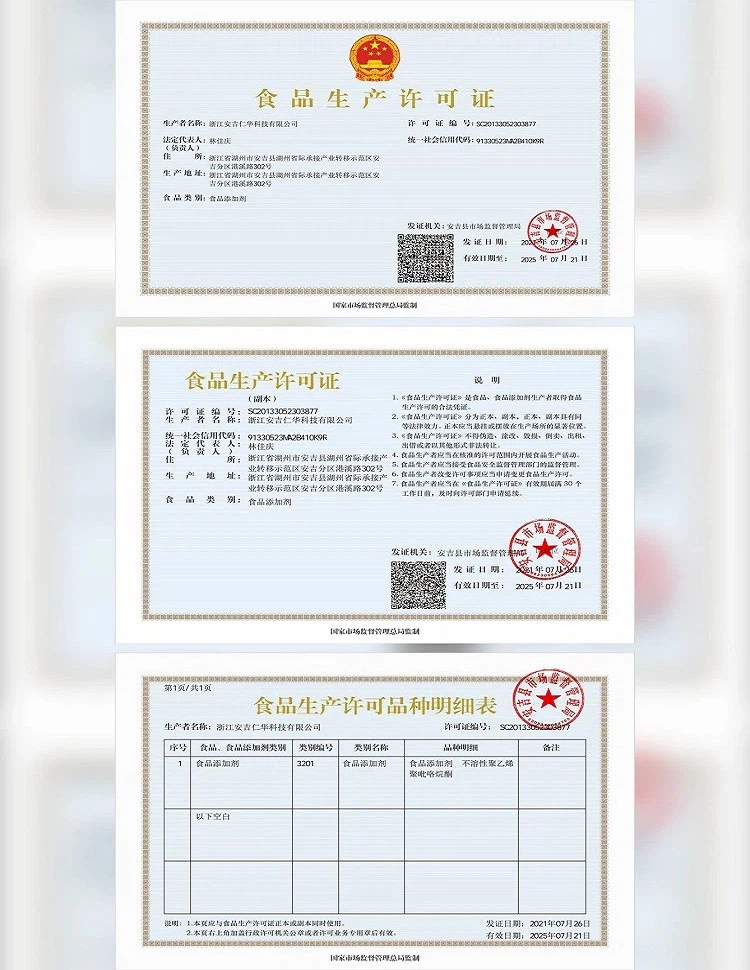
Its products lead the domestic market, achieving pharmaceutical-grade standards and completing the national filing of pharmaceutical excipients, obtaining food production permits. Strong commitment to quality with IS09001 certification and food production license.
Diverse Applications
After 8 years of research and development by the company's founding team, thecompany has formed multiple product series, including polyvinylpyrrolidone (PVP-K).crospovidone (PVPP), N-vinylpyrrolidone (NVP), Polymers with excellent propertiessuch as VP/A copolymer, PVP/A binary copolymer, and povidone-iodine (PVP-l). The products have diverse applications across various industries.
Rich Experience
Dedicated to strict quality control and attentive customer service, our experienced staff is always available to discuss your requirements and ensure complete customer satisfaction.
Competitive Pricing
We offer competitive pricing without compromising on quality, making our products accessible to a wide range of customers.
Definition of Pharmaceutical Excipients
There are several explanations to pharmaceutical excipients covering origin, regulatory and functionality aspects.
"Pharmaceutical excipients are basically everything other than the active pharmaceutical ingredient. Ideally, excipients should be inert, however, recent reports of adverse reactions have suggested otherwise." (Australian Prescriber) "Pharmaceutical excipients are substances other than the active pharmaceutical ingredient (API) that have been appropriately evaluated for safety and are intentionally included in a drug delivery system." Simply said the excipients enable the drug substance to be applied to the patient in the right form and supports the way and place of action without being active themselves.




Improved stability
Excipients help stabilize the active pharmaceutical ingredient by protecting it from degradation due to environmental factors such as heat, humidity, and light. They also enhance the shelf life of the drug product.
Enhance drug delivery
Excipients facilitate better absorption and bioavailability of the api, ensuring optimal therapeutic effects. They can be designed to modify the release rate of the drug, providing controlled or sustained delivery.
Facilitate manufacturing
Excipients aid in the processing, handling, and manufacturing of drug products. They can improve flowability during tablet pressing, act as binders to hold components together, or function as lubricants to prevent sticking in the machinery.
Mask unpleasant sensory properties
Excipients can mask unpleasant tastes and smells, making oral medications more tolerable for patients. They can also enhance the appearance and feel of the final dosage form, improving patient compliance.
Pharmaceutical excipient is defined as any ingredient other than the active ingredient(s) included in formulations of therapeutic goods, such as medicines, vaccines and medical devices. Excipients are also used in some cosmetic products, and nutraceutical food supplements.
In most products, excipients constitute the largest component of the formulation, being anywhere from 40 to 99+ percent by weight. This is why excipients are often referred to as 'bulking' agents.
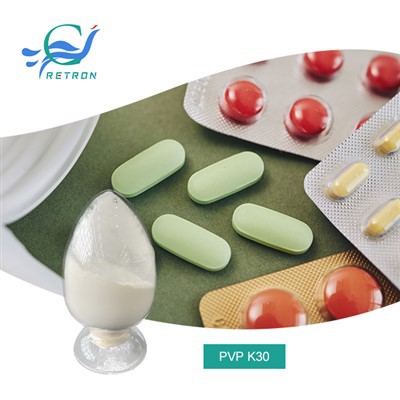
If we take the example of pharmaceutical excipient tablets – a commonly used pain killer medicine, each pharmaceutical excipient tablet contains 500mg of paracetamol, which is the active ingredient. However, there are other ingredients in the pharmaceutical excipient, as outlined below:
●Maize starch
●Purified talc
●Stearic acid
●Povidone, and,
●A film coating made from hypromellose

Characteristics of Pharmaceutical Excipients
Pharmaceutical excipients range from inert and simple to active and complex substances that can be difficult to characterize. Traditionally, pharmaceutical excipients were often structurally simple, biologically inert, and of natural origin, such as corn, wheat, sugar, and minerals. Many more novel and increasingly complex excipients have been developed as novel drug formulation delivery systems emerge and evolve. The inert and innocuous nature of pharmaceutical excipients is no longer a given feature in drug formulations. Many pharmaceutical excipients are potential toxicants at high doses in animals, though safe in humans at therapeutic doses, including commonly used excipients such as cyclodextrins, dextran, and polyethylene glycol.
Apart from the physical and chemical properties it is important the pharmaceutical excipients used are pharma grade excipients and comply with the current pharmacopeia´s such as ph. Eur (european pharmacopeia) , usp-nf (united states pharmacopeia) and jp (japanese pharmacopeia). The pharmaceutical grade pharmaceutical excipients production also requires the gmp level for excipients.

Choosing one or several pharmaceutical excipients for a drug formulation is an important step in drug development. A carefully-chosen excipient may reduce manufacturing costs by being multifunctional, or may enhance patient experience by offering taste masking properties. A pharmaceutical excipients must best suit the intended dosage form of the drug, demonstrate great organoleptic properties, conform to pharmacopeial regulations, be easy to source, and work effectively. The right pharmaceutical excipients will have the ideal pharmacokinetic properties for your intended pharmaceutical application. It will also work well with your existing equipment or fit into your manufacturing plan.
Deciding factors may include the intended use of the compound, the amount of compound needed (grams to tonnage) or environmental conditions that might affect a pharmaceutical excipients. Other considerations include potential toxicity, the origin of the chemicals, and other special factors. For example, a plant-based excipient might be chosen over one of animal origin (gelatin).
Pharmaceutical excipients are crucial to drug delivery within the body. Generally, an excipient has no medicinal properties. Its standard purpose is to streamline the manufacture of the drug product and ultimately facilitate physiological absorption of the drug. Excipients might aid in lubricity, flowability, disintegration, taste and may confer some form of antimicrobial function. Selecting the appropriate pharmaceutical excipients to support the design of your pharmaceutical formulation is an important step in the drug manufacturing process.
Pharmaceutical excipients have different roles in a formulation. Some of the main ones include:
●Aid in the processing of the drug delivery system during its manufacture.
●Protect, support, or enhance stability, bioavailability, or patient acceptability.
●Assist in product identification, and enhance any attribute of the overall safety.
●Assist in the effectiveness and/or delivery of the drug in use.
●Assist in maintaining the integrity of the drug product during storage.

Are Pharmaceutical Excipients Effective?
An important question today, at least within the pharmaceutical excipients space, is whether excipients are inactive, that is, passive bystanders that do nothing other than to hung about in products. Some have gone as far as to say that these materials are unnecessarily added into products for marketing purposes and should be avoided by consumers. This is understandable.
We can say for certain that for the most past, pharmaceutical excipients are inert (or correctly, intended to be biologically inert). But this is not without exceptions. Generally, natural or partly-natural excipients, many of which are part of the normal human diet, are biologically inert, that is, they do not elicit a pharmacological effect. The definition of natural and nature-inspired excipients is provided in this article, which you can read by clicking through this link.
Examples of such pharmaceutical excipients include, but are not limited to the below:
●Cellulose derivatives, such as hypromellose, microcrystalline cellulose, and ethylcellulose.
●Polysaccharides, including starches, sugars and sugar alcohols, acacia, and mannitol.
●Plant oils and derivates.
Many other fully synthetic substances, such as povidone, acrylic copolymers and inorganic minerals (such as calcium carbonate and calcium phosphate) are also established as inert.
Within the pharmaceutical sector, the principal requirement for any pharmaceutical excipients is functionality, which simply refers to fitness for a named purpose. But fitness for one use does not mean fitness for use in another, and depending on factors such as route of administration, age, patient group or dosage, a material that is fine for oral use may be hazardous when injected or inhaled.
We also know for certain that, while adverse reactions to pharmaceutical excipients are generally rare, they still do occur, and pharmaceutical excipients can be hazardous especially when they are not used correctly. This is why consumers are advised to always read labels and liaise with health care professionals to avoid the use of products that might contain ingredients likely to cause adverse events. Click here to read about safety assessments of pharmaceutical excipients.
Many pharmaceutical excipients have caused problems in paediatric and adult patients, thus the idea that pharmaceutical excipients are inactive materials is somewhat misleading, and possibly dangerous.
How to Select Pharmaceutical Excipients?
Pharmaceutical excipients refer to the substances used in the production and formulation of medicines. They perform multiple functions in pharmaceutical preparations and are likely to affect the quality, safety and effectiveness of drugs.
Pharmaceutical excipients can be classified into natural, semi-synthetic and fully synthetic compounds according to their sources. And based on their use, excipients can be divided into diluents, binders, disintegrants, lubricants, glidants and anti-caking agents, wetting agents and solubilizers.
Among all varieties of pharmaceutical excipients, how to select the most appropriate ones for a specific drug formulation project? The guidelines below should be taken into consideration.

The compatibility of the main drug and the excipients should be studied
When screening and researching drugs with new chemical structures, attention should be paid to the investigation of the interaction between the main drug and the excipients. The pharmaceutical excipients should have stable properties with no physiological activity, no influence on the content determination of the main drug and no adverse effect on the dissolution and absorption of the drug. According to the above principles, when we select pharmaceutical excipients, we must first conduct research on the compatibility of the main drug and excipients. Through preliminary investigation, we can understand the excipient-to-excipient interaction and excipient-to-drug interaction, to avoid the selection of excipients with adverse interactions in prescription design.
For lack of relevant research data, compatibility studies can be conducted. For example, for solid oral preparations, several kinds of pharmaceutical excipients can be selected at first, and then mix the main drug and excipients with a certain proportion, and put them under strong light (4500±500Lux), high temperature (60℃) and high humidity (90±5 %) conditions for 10 days, and finally use HPLC to check whether the content and related substances changed before and after placing. When necessary, the active pharmaceutical ingredients (APIs) and excipients can be used for parallel control experiments to judge whether it is the change of the API itself or the influence of the excipients. If conditions permit, experiments such as hot plate (DTA or DSC) can be used to determine whether the main drug interacts with the excipients.

The selection of excipients should be quality centric
The choice of pharmaceutical excipients should first consider the mechanism of action of the drug. Second, the excipients chosen should meet the characteristics and requirements of the dosage form. Third, it is a must to study the effect of the excipient's physical and chemical properties on the preparation. Changes in the excipient's physical and chemical properties may affect the quality of the preparation in terms of viscosity, particle size and distribution, fluidity, moisture, pH, etc. For the polymer materials used in sustained and controlled release formulations, changes in molecular weight and viscosity may have a significant impact on the release behavior of drugs. Therefore, according to the characteristics of the preparation and the route of administration of the drug, the physicochemical properties of the pharmaceutical excipients in the prescription that may affect the quality of the preparation should be analyzed. If necessary, the corresponding quality control standards should be formulated, and attention should be paid to the selection of appropriate sources of supply to ensure the stability of the quality of pharmaceutical excipients.
It should be noted that although some pharmaceutical excipients pass the short-term compatibility test without problems, new degradation impurities may appear after 3-6 months of accelerated test. On the contrary, sometimes the compatibility study is first problematic, everything gets fine after adjusting the ratio. For instance, captopril (captopril) and magnesium stearate are incompatible, but the tablet with high drug content (100mg) and magnesium stearate are stable, while tablets with low drug content (2 mg) showed significant incompatibility. Therefore, the results of the compatibility test between raw materials and excipients cannot fully represent the stability under real conditions.
Our Factory
Zhejiang Retron Biotech Co., Ltd. (referred to as Retron Biotech) is located in the town of Tianzi Lake, Anji County, which is the first county in China to receive the "United Nations Habitat Environment Award" and known as the "Hangzhou Back Garden". Retron Biotech was established in April 2021, covering an area of over 5.3 acres with a total investment of 28 million USD. It is a technology-based company specializing in the research and development, production, domestic and overseas business, and application technical services of polymer materials.
The company has obtained ISO 9001 Quality Management System certification, ISO 14001 Environmental Management System certification, and ISO 45001 Occupational Health and Safety Management System certification. Its products lead the domestic market, achieving pharmaceutical-grade standards and completing the national filing of pharmaceutical excipients, obtaining food production permits. The company's PVPP and PVP-K30 products have reached the highest versions of the EP10, USP43, and CP2020 standards in the international pharmacopoeias.


Our certificate


Ultimate FAQ Guide to Adsorbent For Beverages
As one of the most professional pharmaceutical excipients manufacturers and suppliers in China, we're featured by quality products and good service. Please rest assured to buy high-grade pharmaceutical excipientsmade in China here from our factory.
medicinal sweetening agents, pharmaceutical preservatives, drug antioxidants