


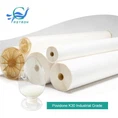
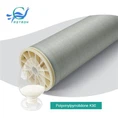
Crospovidone
Why Choose Us?
High-quality Products
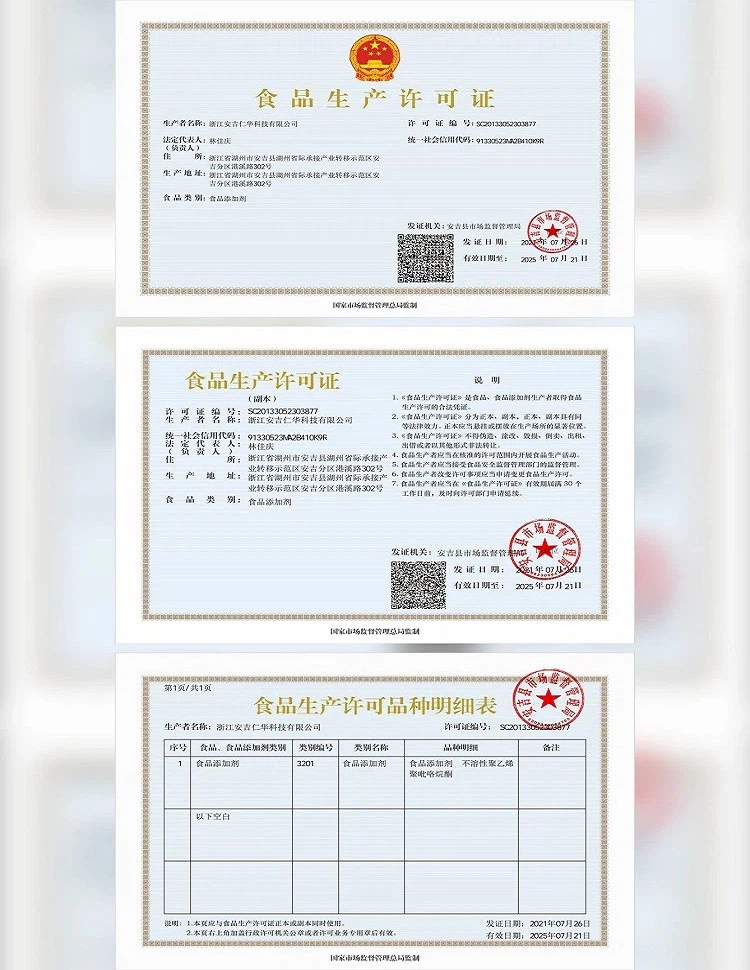
Its products lead the domestic market, achieving pharmaceutical-grade standards and completing the national filing of pharmaceutical excipients, obtaining food production permits. Strong commitment to quality with IS09001 certification and food production license.
Diverse Applications
After 8 years of research and development by the company's founding team, thecompany has formed multiple product series, including polyvinylpyrrolidone (PVP-K).crospovidone (PVPP), N-vinylpyrrolidone (NVP), Polymers with excellent propertiessuch as VP/A copolymer, PVP/A binary copolymer, and povidone-iodine (PVP-l). The products have diverse applications across various industries.
Rich Experience
Dedicated to strict quality control and attentive customer service, our experienced staff is always available to discuss your requirements and ensure complete customer satisfaction.
Competitive Pricing
We offer competitive pricing without compromising on quality, making our products accessible to a wide range of customers.
Definition of Crospovidone
Crospovidone is an insoluble form of polyvinylpyrrolidone, and its use in the pharmaceutical industry as a tablet excipient (a tablet disintegrant and binder) has been widely documented. It is medically used for the treatment of some intestinal disorders as solubilizing excipients to improve the bioavailability of drugs (such as steroids) and as germicides in wound treatment. It is also commonly used as a clarifier in alcoholic and nonalcoholic beverages. The primary pharmaceutical application of crospovidone is that of a tablet disintegrant, although it can also function as a tablet binder. For a polymer to be useful as a pharmaceutical excipient, grades of material need to possess properties such as high swelling capacity, high capillary activity, high hydration capacity, and low bulk density.


Crospovidone is unique among superdisintegrants because it acts via multiple disintegration mechanisms including swelling, and wicking followed by secondary swelling.
In general, an increase in particle size improves the disintegration and dissolution of tablets. This effect is attributed to the efficient formation of hydrophilic networks by larger size particles.
Like other disintegrants, Crospovidone is more effective if used both intra- and extra-granularly. In general, disintegrants added exclusively intra-granularly are not as effective as that added extra-granularly.
Storage conditions do not appear to affect the water uptake and force development for Crospovidone as much as they do for Sodium Starch Glycolate.
The presence of other excipients such as lubricants can impact the efficiency of disintegrants. This is especially the case with lubricants, which can interfere with wetting and water entry.
The solubility of excipients also has an impact on how efficient disintegration proceeds. Generally, insoluble excipients enhance disintegration and dissolution.
● High capillary activity and pronounced hydration capacity, with little tendency to form gels.
● Unlike other disintegrants, Crospovidone can enhance the release and the bioavailability of drugs through complex formation.
● Owing to high water-binding properties Crospovidone can stabilise water-sensitive drugs in solid dosage forms, e.g. in vitamin formulations.
● Highly compressible and particularly suited for actives or formulations with plastic or poorly compactible characteristics.
● Crospovidone grades are non-ionic, and thus do not form complexes with ionic drugs, which can impact drug release and/or stability for cationic drugs. Moreover, disintegration is unaffected by the pH of the medium.
● Yields smooth tablets.
Crospovidone was effectively used on low concentration of 2-4%. Unlike other superdisintegrants, which rely primarily swelling for disintegration, crospovidone uses a combination effect swelling and wicking so that ODF preparations can release drug ingredients from the dosage form quickly.
The amlodipine besylate can be formulated into fast orally dissolving film preparation using HPMC polymer with crospovidone. A variation concentration of crospovidone gives effect to characterization of amlodipine besylate fast orally dissolving films. F2 with 4% crospovidone concentration is the best formula with 31.50 seconds disintegration time, swelling index at 15 seconds by 242.29% and percent cumulative drug in the 80th second of 98.08%.

Reasons for using Crospovidone to stabilize suspensions
Micronised Crospovidone (Type B) can be added in concentrations of 5 – 12% to oral and topical suspensions to stabilise oral and topical formulations. This grade achieves this effect by increasing the volume of the sediment and reducing its sedimentation rate, and by making it easy to redisperse the sediment by shaking (anticaking effect). These effects are achieved without increasing the formulation's viscosity.
The ability to stabilise suspensions without increasing thickness is particularly useful in ready-to-use suspension or an instant drink-type powder or granulate formats that require the consumer to prepare before use.
The addition of electrolytes such as sodium citrate as well as xanthan gum or sugar syrups is recommended as it increases the sediment volume achieved with Crospovidone in these formulations.
Safety and Precautions
Crospovidone has been used in oral pharmaceutical formulations for several decades and is generally regarded as a nontoxic and non-irritant material. Short-term animal toxicity studies did not show any adverse effects associated with crospovidone. However, there are not enough data to permit the assignment of an acceptable daily intake value in humans.
Toxicology: Mouse toxicity studies have shown to be as follows: LD50 (mouse, IP): 12g/kg. Not a known carcinogen.
However, when handling Crospovidone observance of the prevailing SHEQ protocols appropriate to the circumstances and quantity of material handled is recommended. Eye protection, gloves and a dust mask should be used.
Stability and Storage Conditions
Crospovidone is highly hygroscopic and absorbs significant amounts of moisture (25% water uptake at 75% RH). Storage conditions selected should prevent contact with the atmosphere for prolonged periods of time. Crospovidone has an expected shelf life is 3 years. Over time, residual peroxides increase, which can affect the stability of oxygen-sensitive molecules.
Sustainability and Environmental Impact
Crospovidone is an artificial polymer obtained through chemical synthesis. Being an inert and non-toxic excipient it is considered safe for the environment, with minimal long-term impact on ecology or marine life.
Is Crospovidone Cross Linked Insoluble?
The preparation of vinylpyrrolidone for crospovidone is similar to povidone. The vinylpyrrolidone is polymerized in solution using a catalyst to produce crospovidone by a popcorn polymerization process. Crospovidone is a white, free-flowing, practically tasteless and odorless, hygroscopic powder.
Crospovidone is a cross-linked, water-insoluble superdisintegrant. It is usually incorporated dry in the running powder of a tablet formulation, but it can also be processed by wet and dry granulation methods. Typical use levels in tablet formulations range from 2% to 5%, but in orally disintegrating tablets in particular and some capsule formulations, crospovidone is used at much higher levels up to 30%.
Similar to sodium starch glycolate, crospovidone disintegrates tablets mainly by swelling, with little tendency to form gels. Crospovidone can also be used for solubility enhancement of poorly soluble drugs in the process of coevaporation. This process enables the drug adsorption onto crospovidone in the presence of a suitable solvent, and the solvent is then evaporated to provide a solid mixture with a faster drug dissolution rate.
Peroxides. The absorbance is not more than 0.35 for Type A corresponding to not more than 0.04 per cent, expressed as hydrogen peroxide and for Type B corresponding to not more than 0.1 per cent, expressed as hydrogen peroxide.
For Type A
Crospovidone solution. Dissolve 4 g of Crospovidone in water and dilute to 100.0 ml with water.
Test solution. Transfer 25.0 ml of Crospovidone solution to a 50-ml beaker, and add 2.0 ml of titanium trichloride- sulphuric acid solution. Allow to stand for 30 minutes and filter.
Blank solution. Transfer 25.0 ml of Crospovidone solution to a 50-ml beaker, and add 2.0 ml of 13 per cent v/v solution of sulphuric acid.
Measure the absorbance of the resulting solution at the maximum at about 405 nm (2.4.7) against blank solution.
For Type B
Crospovidone solution. Dissolve 1.6 g of Crospovidone in water and dilute to 100.0 ml with water.
Test solution. Transfer 25.0 ml of Crospovidone solution to a 50-ml beaker, and add 2.0 ml of titanium trichloride- sulphuric acid solution. Allow to stand for 30 minutes and filter.
Blank solution. Transfer 25.0 ml of Crospovidone solution to a 50-ml beaker, and add 2.0 ml of 13 per cent v/v solution of sulphuric acid.
Measure the absorbance of the resulting solution at the maximum at about 405 nm (2.4.7) against blank solution.
What Are the Impurities in Crospovidone?
|
Excipient |
Residue or impurity |
|
Microcrystalline cellulose |
Lignin, hemicelluloses, water |
|
Starch |
Formaldehyde |
|
Talc |
Heavy metals |
|
Dibasic calcium phosphate dihydrate |
Alkaline residue |
What Is the Chemical Structure of Crospovidone?

1-Ethenyl-2-pyrrolidinone homopolymer.
1-Vinyl-2-pyrrolidinone homopolymer.
Crospovidone is a water-insoluble synthetic cross-linked homopolymer of N-vinyl-2-pyrrolidinone. It contains not less than 11.0percent and not more than 12.8percent of nitrogen (N), calculated on the anhydrous basis.
Packaging and storage - Preserve in tight containers.
USP Reference standards - USP Crospovidone RS.
Identification
A: Infrared Absorption, on specimen previously dried in vacuum at 105for 1hour.
B: Suspend 1g in 10mLof water, add 0.1mLof 0.1Niodine, and shake for 30seconds. Add 1mLof starch TS, and shake: no blue color develops.
PH: Between 5.0and 8.0,in an aqueous suspension (1in 100).
Water, Method : Not more than 5.0%.
Residue on ignition: Not more than 0.4%, a 2-g specimen being used.
Water-soluble substances
Transfer 25.0g of Crospovidone to a 400-mLbeaker, add 200mLof water, and stir on a magnetic stirrer,using a 5-cm stirring bar,for 1hour. Transfer to a 250-mLvolumetric flask with the aid of about 25mLof water, add water to volume,and mix. Allow the bulk of the solids to settle. Pass about 100mLof the relatively clear supernatant through a membrane filter having a 0.45-µm porosity, protected against clogging by superimposing a membrane filter having a 3-µm porosity. While filtering,stir the solution above the filter manually or with a mechanical stirrer, taking care not to physically damage the membrane filter.Transfer 50.0mLof the clear filtrate to a tared 100-mLbeaker,evaporate to dryness, and dry at 110for 3hours: the weight of the residue does not exceed 75mg (1.50%).

When compaction force is applied, the polymer deforms. Upon contact with water, it absorbs water via capillary action and regains its normal structure releasing an amount of energy capable to break the tablet. The particle size of crospovidone strongly affects the disintegration process, and larger particles provide a faster disintegration. As size increases, the intra-particular porosity increases, leading to larger water uptake and faster disintegration. Rudnic et al. concluded that the increase in crospovidone particle size improved the disintegration and dissolution of tablets. Several grades of crospovidone are available, differing in particle size distribution (standard, fine, superfine, micronized), bulk density, hydration capacity, and peroxide levels.
Generally, crospovidone is used at the concentration of 2%–5% w/w. Crospovidone levels higher than 8% of tablet weight produces weaker tablets with a faster disintegration. Being nonionic in nature, the disintegration efficiency of crospovidone is independent of the pH of media and thus, a potentially suitable disintegrant for cationic drugs. Molecular properties of crospovidone, therefore, are unlikely to affect the excipient's functionality. The residual peroxides in crospovidone, however, can affect the stability of oxygen-sensitive molecules. Results from drug-excipient studies and a formulation spiking study showed that residual peroxides in crospovidone promoted the formation of the N-oxide. Effect of sorbed moisture on the functionality of disintegrant has been studied.
Influence of the Particle Size of Copovidone and Crospovidone on Tablet Characteristics
Copovidone and crospovidone are commonly used excipients in solid oral dosage. Typically, copovidone is used as dry binder and crospovidone as disintegrant in tableting formulations. The use of dry binder and disintegrant needs to be balanced to assure both: strong but quickly disintegrating tablets.
The influence of different copovidone and crospovidone grades on the tablet's tensile strength and the ejected solid fraction at different compression pressures were evaluated systematically: Compactability plots, compressibility plots and bondability plots were generated to visualize the influence of the individual excipient on the tableting characteristics.
Contour plots were generated to illustrate the influence of each excipient on the tensile strength and disintegration time of the resulting tablets at different compression pressures. Potential interactions and synergies respectively between the different grades of the tested excipients were illustrated.
Is Crospovidone a Super Disintegrant?
Currently, there are a great number of materials called disintegrants, which are made by modification of natural polymers or by chemical synthesis. Recently, a new generation of disintegrants called superdisintegrants emerged. These trigger compact disintegration within few minutes upon contact with water. Sodium starch glycolate, crospovidone and croscarmellose sodium are examples of the most commonly used superdisintegrants. They increase the hydrostatic pressure acting either via swelling or by water wicking, or by combination of these mechanisms.
Recently, a new cellulose II-based excipient was introduced as a potential filler-binder. It is denser, but less crystalline and ductile than microcrystalline cellulose I (MCCI). Further, microcrystalline cellulose II (MCCII) shows a lower degree of polymerization and faster compact disintegration than MCCI products independent of the processing conditions. However, there are no reported studies that evaluate the suitability of MCCII as disintegrant.
The aim of this work is to evaluate the disintegrating ability of MCCII in comparison to conventional superdisintegrants such and croscarmellose sodium in distilled water and 0.1 N HCl and to use a full factorial design to assess their functionality in spironolactone compacts.
Our Factory
Zhejiang Retron Biotech Co., Ltd. (referred to as Retron Biotech) is located in the town of Tianzi Lake, Anji County, which is the first county in China to receive the "United Nations Habitat Environment Award" and known as the "Hangzhou Back Garden". Retron Biotech was established in April 2021, covering an area of over 5.3 acres with a total investment of 28 million USD. It is a technology-based company specializing in the research and development, production, domestic and overseas business, and application technical services of polymer materials.
The company has obtained ISO 9001 Quality Management System certification, ISO 14001 Environmental Management System certification, and ISO 45001 Occupational Health and Safety Management System certification. Its products lead the domestic market, achieving pharmaceutical-grade standards and completing the national filing of pharmaceutical excipients, obtaining food production permits. The company's PVPP and PVP-K30 products have reached the highest versions of the EP10, USP43, and CP2020 standards in the international pharmacopoeias.


Our certificate


Ultimate FAQ Guide to Crospovidone
As one of the most professional crospovidone manufacturers and suppliers in China, we're featured by quality products and good service. Please rest assured to buy high-grade crospovidonemade in China here from our factory.
Povidone Iodine Betadine, Povidone-Iodine Solution, Crospovidone