


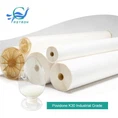
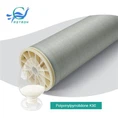
Disintegrant
Why Choose Us?
High-quality Products
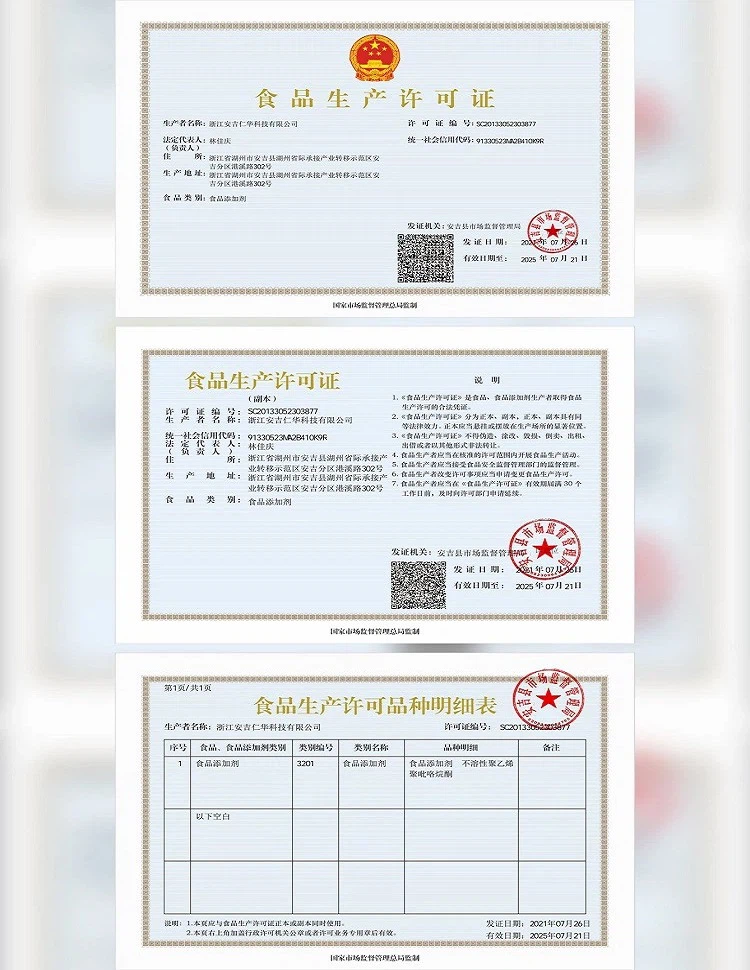
Its products lead the domestic market, achieving pharmaceutical-grade standards and completing the national filing of pharmaceutical excipients, obtaining food production permits. Strong commitment to quality with IS09001 certification and food production license.
Diverse Applications
After 8 years of research and development by the company's founding team, thecompany has formed multiple product series, including polyvinylpyrrolidone (PVP-K).crospovidone (PVPP), N-vinylpyrrolidone (NVP), Polymers with excellent propertiessuch as VP/A copolymer, PVP/A binary copolymer, and povidone-iodine (PVP-l). The products have diverse applications across various industries.
Rich Experience
Dedicated to strict quality control and attentive customer service, our experienced staff is always available to discuss your requirements and ensure complete customer satisfaction.
Competitive Pricing
We offer competitive pricing without compromising on quality, making our products accessible to a wide range of customers.
Definition of Disintegrant
Disintegrants help a tablet to break up after oral administration. A disintegrant is an agent, used in the preparation of tablets, which causes them to disintegrate and release their medicinal substances on contact with moisture. Disintegrants are agents added to tablet formulations to promote the break-up of the tablet into smaller fragments in an aqueous environment, thereby increasing the available surface area and promoting a more rapid release of the drug substance.


Disintegrants are added to a formulation to promote the drug release. They do this by increased water wicking into the plug, and they promote deaggregation of the plug particles. For IR tablets disintegrants are essential, but for capsules, they are less important because the plug is less of a barrier to the drug release than a compressed tablet. Adding a disintegrant to a capsule formulation does facilitate the drug release, which makes the formulation more rugged to the inevitable variation in excipient properties and processing conditions that occur during production over the manufacturing life of a product.
Disintegrants are added to a formulation to promote the drug release. They do this by increased water wicking into the plug, and they promote deaggregation of the plug particles. For IR tablets disintegrants are essential, but for capsules, they are less important because the plug is less of a barrier to the drug release than a compressed tablet. Adding a disintegrant to a capsule formulation does facilitate the drug release, which makes the formulation more rugged to the inevitable variation in excipient properties and processing conditions that occur during production over the manufacturing life of a product.
There are two classes of disintegrants: Traditional disintegrants, such as starch, and super disintegrants, which include croscarmellose sodium, crospovidone, and sodium starch glycolate. Currently, these three supper disintegrants are the most popular disintegrants. In capsule formulations, super disintegrants are typically used at levels from 4% to 8% , which is about twice that used in a typical tablet formulation.
The reason for this is that when a disintegrate breaks apart the plug, it does so by swelling, and this expansion of the disintegrant particles pushes the adjacent particles apart, but because plugs have a much higher porosity and the particles are not packed as close together, a given amount of expansion does not push the particle apart as much as in a tablet where the particles are much closer together. Sodium starch glycolate is known to swell more than other super disintegrants, which makes it a popular choice for capsule formulations.

What Are the Properties of an Ideal Disintegrant?
Croscarmellose sodium. Disintegrant, normally used in 2% concentration in tablets made by direct compression and 3% by wet granulation. White or grayish-white powder, practically insoluble in anhydrous ethanol. Hygroscopic. Insoluble in water but rapidly swells in it to four to eight times the original volume. Density in bulk 0.53 g/ml. pH 5–7 in an aqueous slurry. Loss on drying (LOD) NMT 10%, 105°C. Particle size data: NMT 2% retained on 200-mesh (74 μm) and NMT 10% on 325-mesh (45 μm) screen. Laser light diffraction specifications (dry powder?): d(10) NMT 25 μm, d(0.5) 25–55 μm, and d(0.9) NLT 60 μm.
Disintegrants are agents added to tablet formulations to promote the break-up of the tablet into smaller fragments in an aqueous environment, thereby increasing the available surface area and promoting a more rapid release of the drug substance. In more recent years, several newer disintegrants have been developed, often called "super disintegrants." These newer substances can be used at lower levels than conventionally used disintegrants. Three major mechanisms and factors affecting tablet disintegration are suggested as swelling, porosity and capillary action and deformation. Three major group of compounds that have been developed as superdisintegrants are modified starches, cross-linked polyvinylpyrrolidone and modified cellulose.
One of the major streams of application of superdisintegrants is in the formulation of oral disintegrating tablets/mouth dissolving tablets. An oral disintegrating tablet is a solid dosage form that disintegrates and dissolves in the mouth, either on or beneath the tongue or in the buccal cavity without water, within 60 s or lower. The US Food and Drug Administration (FDA) Center for Drug Evaluation and Research (CDER) defines, in the orange book, an oral disintegrating tablet as, "A solid dosage form containing medicinal substances, which disintegrates rapidly, usually within a matter of seconds, when placed upon the tongue." At present, oral disintegrating tablets are the only quick-dissolving dosage form recognized by FDA and listed in the approved drug products with therapeutic equivalence evaluations.
The drug selected for the study was cefexime trihydrate, which is used in the treatment of uncomplicated urinary tract infections. The aim of the study was to formulate an oral disintegrating tablet of cefixime trihydrate using two superdisintegrants separately (crosscarmellose sodium and sodium starch glycolate), and to select the best among the two based on the disintegration time and other tableting properties.


Factors affecting the performance of a disintegrant include its particle size, methods of disintegrant incorporation especially for wet granulation, applied compression force, moisture content, and reworking. Changes in the particle size of a disintegrant can affect its performance as a tablet disintegrant. Disintegration time decreased with increase in particle size of starch when the formulation was compressed without a lubricant. However, with a lubricant, disintegration time decreased with decrease in particle size of the disintegrant as lubricant coverage decreased with increase in surface area, resulting in faster disintegration with finer disintegrant particles.
What Is the Effect of Disintegrant on Dissolution?
Comparing the percent area covered by the disintegrant for each measurement point, the CS-10s and CP-10s had areas without the disintegrant, indicating that it was not sufficiently incorporated into the back side of the tablets and, therefore, the disintegration of the tablets was delayed, whereas the CS-60s and CP-60s were inhomogeneous, the area covered by the disintegrant was greater than 5% in any area. This suggests that a sufficient amount of the disintegrant was present throughout the CS-60s and CP-60s tablets. Percolation theory is able to explain that there is a threshold for the amount of disintegrant that affects dissolution.
When the amount of disintegrant is less than the threshold, the network of disintegrant particle in percolation theory is closed and the disintegration of tablet is delayed. Therefore, it is considered that the dissolution of the CS-10s and CP-10s, in which the disintegrant is partially not distributed, were delayed. It is important not to generate areas with no disintegrant in the tablet, and it is possible to determine that the quality of tablets with areas without disintegrant distribution is poor. However, it is difficult to quantitatively evaluate dissolution only by two-dimensional imaging, because the distribution of the disintegrant in the tablet is three-dimensional. Therefore, evaluation with three-dimensional imaging technology is an issue in the future.
Disintegrant is one of the most important components in a typical tablet dosage form. It is responsible for ensuring the break-up of the tablet matrix upon ingestion. Disintegrants act by different mechanisms, and a number of factors may affect their performance. It is important for formulators to understand how disintegrants function so as to be able to judiciously use disintegrants to develop optimized formulations.
If the formulator is required to implement the quality by design paradigm while developing a tablet formulation, it would be important to determine the impact of component ranges and process variations on tablet performance and of particular importance, tablet disintegration. Thus, a better understanding of the mechanisms of disintegrants and the tablet disintegration processes can be critical to product design success.


Powder components may contain diluent, disintegrants, sweetener, and glidant. Most commonly used diluents are lactose, mannitol, and microcrystalline cellulose. Disintegrants examples are pregelatinized starch, crospovidone, croscarmellose sodium, and sodium starch glycolate. Silicon dioxide is most commonly used as glidant. Polyethylene oxide, polyvinyl pyrollidone (PVP K30), lactose, mannitol, maltitol, maltodextrin, Kollidon SR, Eudragit E100, Eudragit RLPO, ethylcellulose, and hydroxypropyl methylcellulose (E50), have been investigated for designing sustained release, delayed release, and rapidly dispersible tablets by BJ.
Drug(s) can be incorporated in binder solvent or powder component, depending upon the solubility, stability, and dose of the drug. If the drug is soluble in binder solvent and the dose is low, it can be solubilized in the solvent. It is recommended to incorporate drug in powder material if it is insoluble, thermolabile, and the dose is high. Similar to the drug, polymer binders could be incorporated in powder material or binder solvent, depending upon solvent characteristics, viscosity, and quantity. Polymers investigated as binders are polylactic acid, polycaprolactone, and polyvinylpyrrolidone (K17, K25, and K30 grades) ethylcellulose. Binder solvent could be aqueous, organic (ethanol, acetone, isopropanol), or hydro-organic solvents. Solvent selection is based on the solubility of drug and binder, viscosity, and surface tension. A combination of solvents can be used to optimize the printing process parameters and quality of printed dosage forms.
What Is the Purpose of a Disintegrant?
Disintegrants are agents added to tablet formulations to promote the break-up of the tablet into smaller fragments in an aqueous environment, thereby increasing the available surface area and promoting a more rapid release of the drug substance. In more recent years, several newer disintegrants have been developed, often called "super disintegrants." These newer substances can be used at lower levels than conventionally used disintegrants. Three major mechanisms and factors affecting tablet disintegration are suggested as swelling, porosity and capillary action and deformation. Three major group of compounds that have been developed as superdisintegrants are modified starches, cross-linked polyvinylpyrrolidone and modified cellulose.
One of the major streams of application of superdisintegrants is in the formulation of oral disintegrating tablets/mouth dissolving tablets. An oral disintegrating tablet is a solid dosage form that disintegrates and dissolves in the mouth, either on or beneath the tongue or in the buccal cavity without water, within 60 s or lower. The US Food and Drug Administration (FDA) Center for Drug Evaluation and Research (CDER) defines, in the orange book, an oral disintegrating tablet as, "A solid dosage form containing medicinal substances, which disintegrates rapidly, usually within a matter of seconds, when placed upon the tongue." At present, oral disintegrating tablets are the only quick-dissolving dosage form recognized by FDA and listed in the approved drug products with therapeutic equivalence evaluations.
The drug selected for the study was cefexime trihydrate, which is used in the treatment of uncomplicated urinary tract infections.The aim of the study was to formulate an oral disintegrating tablet of cefixime trihydrate using two superdisintegrants separately (crosscarmellose sodium and sodium starch glycolate), and to select the best among the two based on the disintegration time and other tableting properties.
Our Factory
Zhejiang Retron Biotech Co., Ltd. (referred to as Retron Biotech) is located in the town of Tianzi Lake, Anji County, which is the first county in China to receive the "United Nations Habitat Environment Award" and known as the "Hangzhou Back Garden". Retron Biotech was established in April 2021, covering an area of over 5.3 acres with a total investment of 28 million USD. It is a technology-based company specializing in the research and development, production, domestic and overseas business, and application technical services of polymer materials.
The company has obtained ISO 9001 Quality Management System certification, ISO 14001 Environmental Management System certification, and ISO 45001 Occupational Health and Safety Management System certification. Its products lead the domestic market, achieving pharmaceutical-grade standards and completing the national filing of pharmaceutical excipients, obtaining food production permits. The company's PVPP and PVP-K30 products have reached the highest versions of the EP10, USP43, and CP2020 standards in the international pharmacopoeias.


Our certificate


Ultimate FAQ Guide to Disintegrant
As one of the most professional disintegrant manufacturers and suppliers in China, we're featured by quality products and good service. Please rest assured to buy high-grade disintegrantmade in China here from our factory.
marine derived disintegrant, brown disintegrant, polymer disintegrant